
Digital Futures Lab/Issue #32: Announcing the Global South AI Safety Report, Events on AI in Critical Sectors and Collaborations Around the World
May has been a month of movement across continents, platforms, and conversations.
Read on for more on our major new initiative from the Global South Network for Trustworthy AI, upcoming panels from members of our team, and a roundup of recent events, writing, and media. ⬇️
upcoming events & initiatives 🤝🏽
On behalf of the Global South Network for Trustworthy AI, Digital Futures Lab is excited to announce the Global South AI Safety Report — a major new initiative to examine how AI systems are actually being built, deployed, used, and maintained across the Global South and the safety risks that arise in the process.
We aim to launch the first edition ahead of the AI Summit in Switzerland in 2027.
The report will:
Examine AI diffusion trends across the Global South
Identify and categorise context-specific AI safety harms
Evaluate where existing safety frameworks fall short
Define the infrastructure needed for meaningful AI safety
Translate findings into targeted global advocacy
The project is co-chaired by Kalika Bali and Vukosi Marivate, and supported by an outstanding advisory panel spanning research, policy, governance, and civil society across the majority world. Learn more about the report and the expert advisory panel here.
Sr. Research Manager Aarushi Gupta will be speaking on a panel hosted by the Gender and Digital Hub (GxD Hub) at LEAD for GLOCAL Evaluation Week 2026.

The session goes beyond technical performance to ask a sharper question: how do we evaluate AI systems in ways that account for gender, context, and lived realities? The discussion will explore blind spots in design, gendered risks, and real-world impact — and will introduce a gender-intentional approach to evaluating AI in development contexts.
📅 June 4, 2026
⏰ 5:30 pm – 7:00 pm IST
📋 Register here!
Sr. Research Associate Dona Mathew will be speaking at the 2026 Digital Rights Asia-Pacific Assembly (DRAPAC), exploring how courts across the region are deploying AI — what opportunities and harms are at stake, and what civil society can do to advocate for rights-respecting design.

📅 June 8, 2026
⏰ 11:30 am (UTC+8) | 9:00 am IST
📋 Register here!
writing 📑
The Global South Network for Trustworthy AI has submitted to the UN Global Dialogue on AI Governance. Our ask is simple: move from principles to practice.
That means:
Localised safety infrastructure, not benchmarks designed for Western contexts
Independent evaluation capacity, not just industry self-reporting
Civil society and grassroots voices at the table, not as an afterthought
Explicit attention to power concentration and environmental costs — the gaps the current framing continues to miss
Read the full submission here.
In a piece for Teacher Plus Magazine’s May edition on computer science education, Research Associate, Sasha John, examines how the rush to “AI-skill” young people may be setting them up for disadvantage rather than empowerment. She argues that the real challenge isn’t preparing youth for an AI future — it’s cultivating an entirely different way of thinking about that future. Read it here.
events 🎤
Founder and Director, Dr Urvashi Aneja, joined Mr Amandeep Singh Gill, the UN Secretary-General’s Envoy on Technology, for the launch of the UN’s AI Governance for Humanity Lab. Anchored in the United Nations Office for Digital and Emerging Technologies (ODET), the Lab advances the recommendations of Governing AI for Humanity — the report of the UN Secretary-General’s High-level Advisory Body on Artificial Intelligence — and delivers on ODET’s mandate to facilitate inclusive, multi-stakeholder dialogue on AI governance.
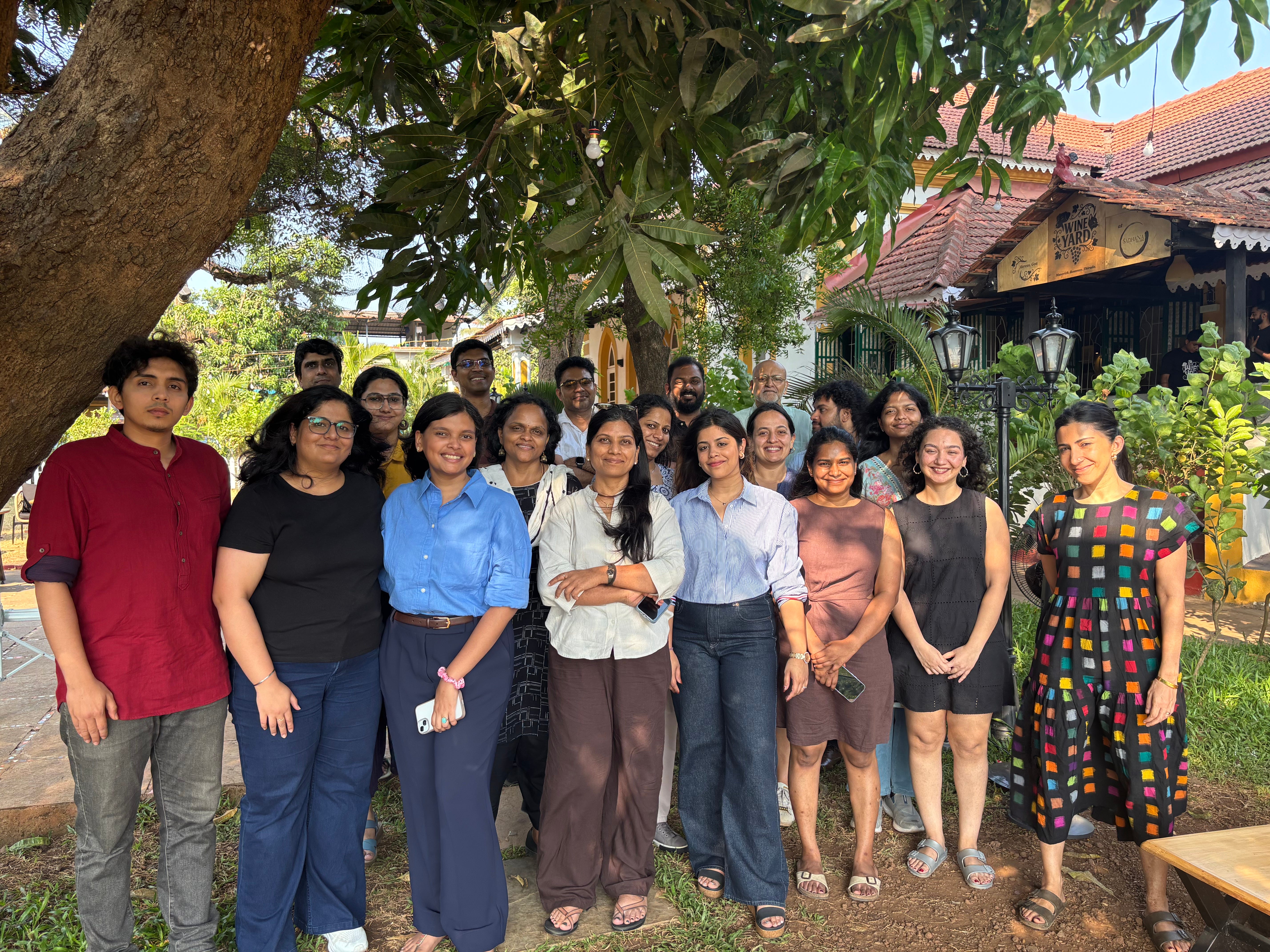
DFL, in collaboration with Careful Industries and supported by the Lloyd’s Register Foundation, hosted a workshop examining the particularities and implications of ‘small AI’ — mapping current architectures, deployment practices, and observed risks, with particular attention to India and the Global South.
The workshop and resulting report are part of a larger Foresight Review by Careful Industries and Lloyd’s Register Foundation on the safe adoption of AI in engineered systems — an initiative examining AI’s impact on worker safety, environmental sustainability, and infrastructure resilience.
Dona participated in EarthKeepers vs AI Empires, a convening of civil society organisations in Lusaka, Zambia, from May 2 – 4, 2026. The gathering saw 100+ representatives from movements around the world discuss the tangible impacts of extractive AI supply chain mechanisms on indigenous communities, land, and natural resources, and share and sharpen strategies to protect the planet and the people from resource-intensive development trajectories.
Sasha moderated a panel on the material concerns and best practices for operationalising Responsible AI in the social sector, as part of AI & Equality’s Festival of Ideas — an online convening of researchers, policymakers, practitioners, and developers working to shape the political and social reality of AI.
She was joined by leading practitioners from India’s social sector, including Astha Khurana (Adalat AI), Jigar Doshi (ARTPARK), Amrita Mahale (ARMMAN), Dr. Baarish Aggarwal (Tattle), and Tanisha Kedia (Quest Alliance).
Urvashi delivered a keynote at re:publica, Europe’s largest digital society festival. Her talk — ‘It’s Happening to Us, Not With Us: AI, the Global South and the Fight for Social Justice’ — draws on DFL’s original research on AI and gender in India, asking what the fight for digital justice actually requires when the people most affected by these systems have the least power to define their terms.
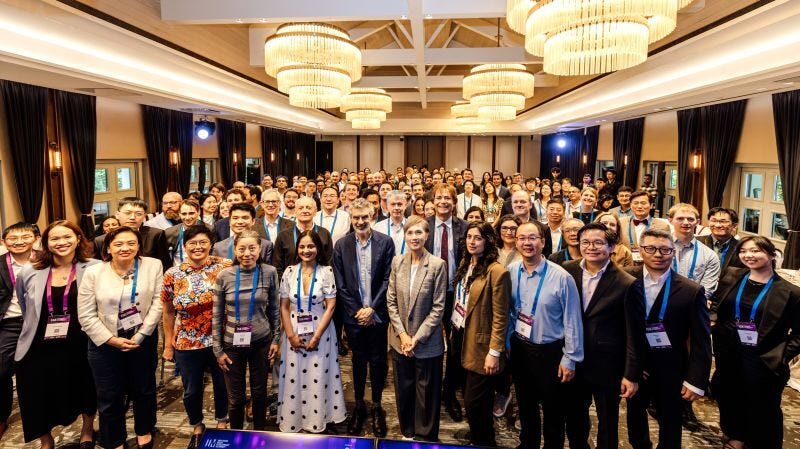
Urvashi also attended the inaugural International Scientific Exchange on AI Safety (ISE) in Singapore — a convening of leading scientists and practitioners advancing global collaboration in AI safety research — as well as New America’s Shangri La Series: AI for Middle Powers in Hawaii, which brings together policymakers, technologists, and scholars to chart a practical agenda for AI governance and deployment among middle-power nations.
media ✍🏽
Urvashi was interviewed by AufRuhr, the Mercator Foundation magazine, on how the Global South functions as an AI testing ground while power and value creation remain concentrated in the Global North. Speaking at re:publica in Berlin, she touched on digital colonialism, resource consumption, language, and alternatives to large language models.
Read the full interview here.
Have an idea for a creative collaboration or a research partnership? Write to us at hello@digitalfutureslab.in